
What to Expect at Your Dental Cleaning Visit
A routine dental cleaning is a short, structured appointment, and knowing the order of events makes it easier to arrive prepared. This walkthrough covers what typically happens at a dental cleaning visit, from the front desk to the final polish.
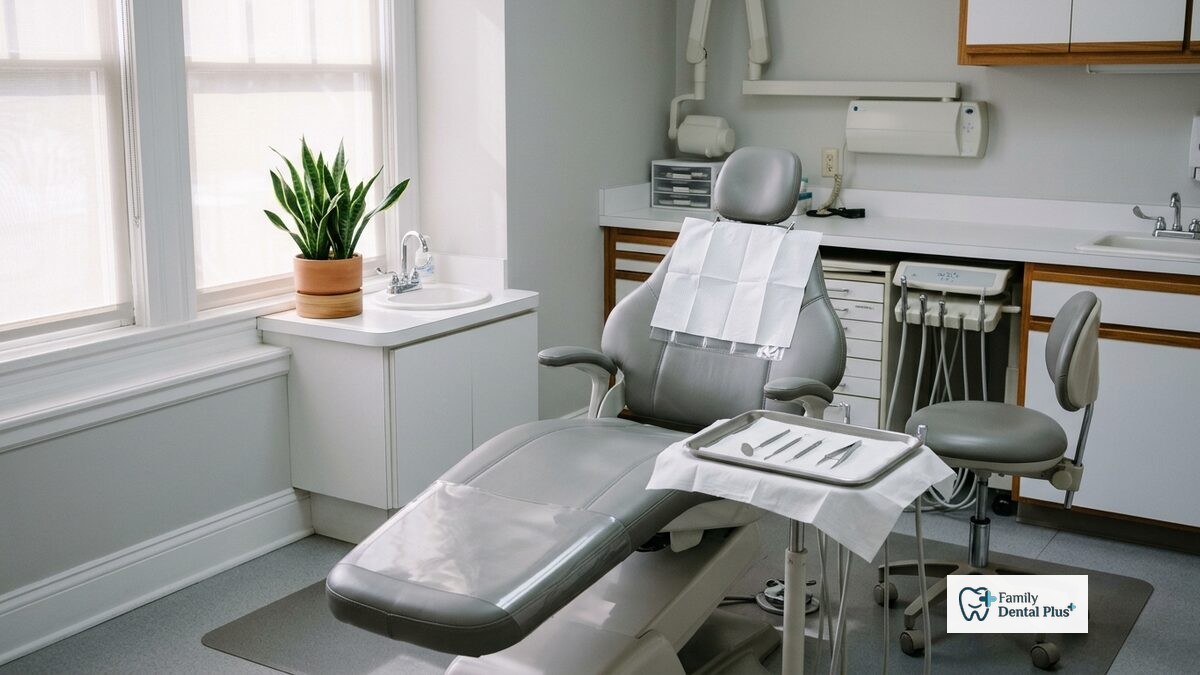
Every dental office runs its schedule a little differently, so read this as a general outline of what to expect at a dental cleaning visit, not a script for any single practice. Family Dental Plus in Wilmington lists cleanings under general dentistry, alongside exams, X-rays, fluoride, and sealants. For details about your own appointment, call (310) 830-3452.
Before you arrive. A little preparation keeps the visit on schedule and gives the dental team accurate information. It helps to bring:
- Your insurance card and a photo ID, if you plan to use coverage
- A current list of any medications you take
- Notes on any changes in your health since your last visit
- Any questions you want to ask the dentist or hygienist
If you are a new patient, ask when you book whether forms can be completed ahead of time or whether you should arrive a few minutes early. If you are unsure how your plan applies to a cleaning, the practice's insurance page states that it accepts most major dental plans and verifies coverage before treatment. Calling to verify your specific plan is the simplest way to confirm. The office also lists Spanish among the languages it speaks, so you can ask for that when you call.
Step 1: Check-in and health questions. The visit usually starts at the front desk, where you confirm your contact and insurance details. Before the cleaning begins, a dental assistant or hygienist commonly asks a few questions: whether you have had any recent pain, whether you take any medication, and whether anything has changed since your last appointment. These answers help the dental team keep you safe during the visit, so share them even if they seem minor.
Step 2: Getting settled. You are then taken to the treatment chair, and a bib is placed around your neck to protect your clothing. The chair is adjusted so the hygienist can see and reach your teeth comfortably. This is a good moment to mention if you feel anxious or have a preference. Agreeing on a simple hand signal in advance is a common way to ask for a pause at any point.
Step 3: A look around your mouth. Using a small mirror, the hygienist typically examines your teeth and gums before the cleaning starts. Some visits include X-rays. Whether yours does is a decision for the provider, based on your history and your last set of images.
Step 4: Scaling. The core of the appointment is the removal of plaque, a sticky layer of bacteria, and tartar, which is hardened plaque that regular brushing does not remove. The hygienist uses handheld dental instruments to scrape these deposits from the surfaces of your teeth, including along the gumline. You may hear scraping sounds, and some people notice pressure. If anything feels uncomfortable, speak up during the visit rather than waiting until afterward.
Step 5: Polishing and flossing. Next, your teeth are brushed with a special polishing toothpaste, and the hygienist flosses between your teeth. A rinse usually follows.
Step 6: Fluoride. Some cleanings end with a fluoride application. Whether it is part of your visit depends on your provider's recommendation, so it is reasonable to ask about it ahead of time or at the chair.
Step 7: Exam and recommendations. The dentist typically reviews your mouth and talks through what they found, along with any recommendations. Questions about your own teeth and gums belong in that conversation, because a general article cannot answer them. If follow-up care is suggested, the practice's insurance page states that a written estimate is provided before any treatment starts, breaking down what insurance covers and what your share looks like.
After the visit. Before you leave, ask when your next visit should be scheduled. Some outside guides describe every six months as a common interval, but the right schedule for you is something to settle with your dentist. It is also worth asking whether there is anything to avoid eating or drinking right afterward, particularly if fluoride was applied.
Practical details. Family Dental Plus is at 104 W Anaheim Street, Suite C, Wilmington, CA 90744. The contact page lists Monday 10:00 AM to 5:30 PM and Tuesday through Friday 9:00 AM to 5:30 PM, with weekends closed, so call to confirm current hours before you book. The same page notes an ADA-compliant entrance, accessible parking, an accessible restroom, and no stairs. The phone, (310) 830-3452, is listed as the fastest way to reach the office, and online appointment requests are also available on the contact page.
This article is informational and is not medical advice. Treatment options should always be decided in consultation with a qualified physician or dentist.