A dental crown is a custom cap that covers a tooth to restore its shape, strength, and function. Many patients hear the word for the first time during an exam and want to understand what it involves before deciding. This guide walks through the reasons a crown may be suggested, what the appointments typically look like, and how the finished restoration is cared for.
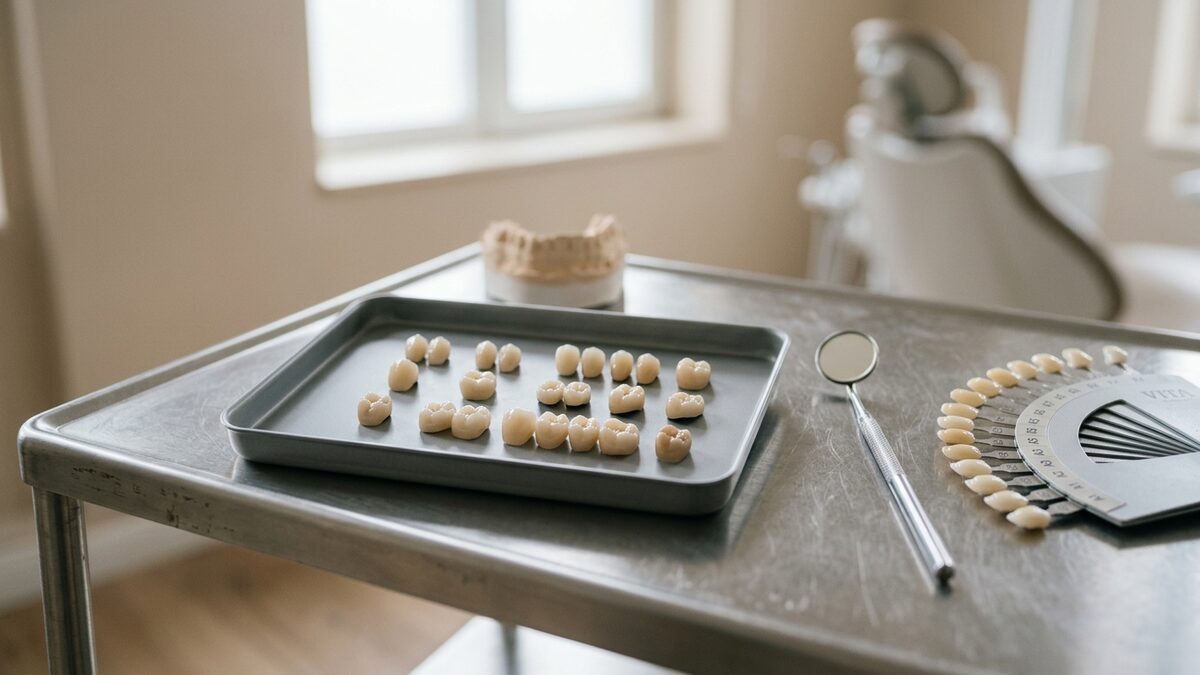
A crown fully encases the visible portion of a tooth above the gum line. Unlike a filling, which replaces a small area of lost structure, a crown surrounds and supports the remaining tooth so that biting and chewing forces are distributed more evenly. The clinical team generally considers a crown when a tooth needs more coverage than a filling can reliably provide.
Several situations commonly lead to this recommendation. A tooth with a large area of decay may have too little healthy structure left to hold a standard filling. A cracked or heavily worn tooth may need the protection of a full cap to reduce the risk of further breakage. Teeth that have had root canal treatment often become more brittle over time, so a crown is frequently placed afterward to protect them. Crowns are also used to cover a dental implant or to anchor a bridge that replaces a missing tooth.
Providers weigh these factors alongside the position of the tooth, how much natural structure remains, and the patient's overall oral health. A crown is one restoration option among several, and the choice is discussed rather than assumed. Patients who understand why coverage is being suggested are usually better prepared for the appointments that follow.
What the crown process usually involves from preparation to placement
The traditional approach takes two visits, though some practices offer same-day options using in-office milling technology. At the first appointment, the area is numbed with a local anesthetic. The dentist then shapes the tooth, removing a thin outer layer so the crown will fit correctly and sit flush with neighboring teeth. If a significant amount of structure is missing, a build-up material may be added first to create a stable foundation.
Once the tooth is prepared, an impression or a digital scan is taken. This record is used to fabricate a crown that matches the bite and blends with surrounding teeth. When a crown is made off-site, a temporary crown is placed to protect the tooth in the meantime. The temporary is not as strong as the final piece, so the clinical team usually advises chewing carefully on that side and avoiding sticky foods until the permanent crown is ready.
At the second visit, the temporary is removed and the permanent crown is checked for fit, bite, and appearance. Small adjustments are common and expected. When everything aligns, the crown is bonded or cemented into place. Patients often feel some sensitivity to temperature for a short period afterward, which typically settles as the tooth adjusts. Same-day crowns compress these steps into a single appointment, though not every tooth is suited to that method.
Material options and how patients care for a crown afterward
Crowns are made from several materials, each with trade-offs the provider can explain in relation to a specific tooth. All-ceramic and porcelain crowns are valued for a natural appearance and are often chosen for teeth that show when smiling. Porcelain-fused-to-metal crowns pair a tooth-colored surface with a metal core for added strength. Full metal crowns, including gold alloys, are highly durable and gentle on opposing teeth, which can make them a practical choice for molars at the back of the mouth where appearance matters less.
The best material depends on the tooth's location, the forces it absorbs, any grinding habits, and personal preference. There is no single answer that fits every case, and the discussion is part of the planning stage rather than an afterthought.
Caring for a crowned tooth is largely the same as caring for natural teeth. Brushing twice a day and cleaning between the teeth helps protect the gum line where the crown meets the tooth, since the underlying structure can still be affected by decay. Patients who grind or clench may be advised to use a night guard to reduce stress on the restoration. Routine checkups allow the team to monitor the crown and the surrounding tissue over time. With consistent home care and regular visits, many crowns remain in good condition for many years, though longevity varies from person to person.
If a crown feels high when biting, becomes loose, or causes lingering discomfort, contacting the dental office promptly allows the issue to be assessed early. Most concerns are straightforward to address when they are reported soon after they appear.
Understanding the reasoning, the steps, and the aftercare can make the decision feel less uncertain. A crown is a well-established restoration, and knowing what to expect helps patients take part in the conversation about their own treatment.
This article is informational and is not medical advice. Treatment options should always be decided in consultation with a qualified dentist.